Secret behind Indians’ love affair with engineering study..


Engineer’s Day (September 15) is the birth anniversary of M. Visvesvaraya. Lakhs of engineering graduates are produced in India as another Engineer’s Day arrives, from the thousands of engineering colleges.

Why do so many Indian people want to study engineering?
(I don't ask this question to hurt anyone who is an engineer :p)

In most of cases, It is a combination of: 
Social pressure + Status + Limited opportunities

Let me explain,
As everyone knows India is a developing economy and engineers play an important role in development of a developing economy and so there is a huge demand for engineers. In such an economy where everyone is trying to become an engineer/doctor or someone with significant qualification you just cannot sit around and be satisfied with doing something little or not doing anything at all. We do not have this luxury. There is huge amount of social pressure to prove your smarts or end up in oblivion.

Everyone strives for status and an inordinate amount of respect is given by elders in the family if you say you are an engineer/doctor. This works in both the cases:

   Case 1: You have no engineers in your family. In that case you become a rarity and are respected widely in your tribe.

   Case 2: Your family is swamped with engineers and so becoming one is being on the right path to success.

Not a single child dreams about growing up and sitting in front of a computer trying to solve an obscure bug. They want to be astronauts, scientists, explorers, musicians, sports men etc. But if you belong to an economy where are millions of people competing for each and everything you start looking for security. For every single position on the Nation Cricket team there are more than a lakh cricketers out there struggling and same goes for each and every profession. Also India being a developing country doesn't have a huge research budget and so we don't have that many scientists. The number of institutes focusing on astronomy is low and so is the case for all other professions. Contrast it with engineering where every state has 100's of engineering colleges and the market for engineers is continuously growing with the dawn of technical age it becomes an obvious choice. 

Just to put things into perspective: 
Andhra Pradesh which is one of the many states in India has 900 engineering colleges. 

Due to all these reasons and the simple economics theory of demand and supply at work, so many students end up going for engineering.

India has an increasingly large number of engineers graduating every year from the thousands of institutes without the necessary skill-set/lack of opportunities and so they end up working in jobs that are not necessarily suited to them. The internet is flooded with numerous articles talking about Indian engineers working as railway drivers, rickshaw drivers, sweepers etc. This is shocking but true. These might be one off incidents blown out of proportion but are good enough to scare the parents and kids alike to work hard and become over qualified to avoid such a fate.  

It is often said:
India is a country where people first become engineers and then decide what they want to do. 

Now you know why.

Why is NSG Membership important for India?


For years, India has been trying to gain entry into the Nuclear Suppliers Group (NSG), a 48 member grouping that was formed in the after India’s 1974 nuclear test with the aim of ensuring non-proliferation of nuclear weapons and nuclear technology. From India’s point of view, it was formed to deny India access to sophisticated technology.

The 48 members of the NSG include the five nuclear weapon states, US, UK, France, China and Russia. The other 43 are signatories to the Nuclear Non Proliferation Treaty (NPT). India is not a member of the NPT which it calls discriminatory.

It was civil nuclear deal with US, concluded in 2008, that created the way for India’s application as a member of NSG. India’s commitment to separate its civilian and military nuclear programmes and its non proliferation record — ensuring that its indigenously developed technology is not shared with other countries—is what works in its favour. Besides, India has also ratified an Additional Protocol with the International Atomic Energy Agency (IAEA) which means that its civilian reactors are under IAEA safeguards and open for inspections — ensures increased transparency.

Membership of the NSG means:

1. Access to technology for a range of uses from medicine to building nuclear power plants for India from the NSG which is essentially a traders’ cartel. India has its own indigenously developed technology but to get its hands on state of the art technology that countries within the NSG possess, it has to become part of the group.

2. With India committed to reducing dependence on fossil fuels and ensuring that 40% of its energy is sourced from renewable and clean sources, there is a pressing need to scale up nuclear power production. This can only happen if India gains access to the NSG. Even if India today can buy power plants from the global market thanks to the one time NSG waiver in 2008, there are still many types of technologies India can be denied as it is outside the NSG.

3. India could sign the Nuclear non proliferation treaty and gain access to all this know how but that would mean giving up its entire nuclear arsenal. Given that it is situated in an unstable and unpredictable neighbourhood India is unlikely to sign the NPT or accede to the Comprehensive Test Ban Treaty (CTBT) that puts curbs on any further nuclear tests.

4. With access to latest technology, India can commercialize the production of nuclear power equipment. This, in turn will boost innovation and high tech manufacturing in India and can be leveraged for economic and strategic benefits.

For example, India has signed a civil nuclear energy co-operation pact with Sri Lanka. Currently, this entails training people in peaceful uses of nuclear energy, including use of radioisotopes, nuclear safety, radiation safety, nuclear security, radioactive waste management and nuclear and radiological disaster mitigation. If India get access to advanced nuclear technologies, it can start building updated versions of its own fast breeder reactor and sell it to countries such as Sri Lanka or Bangladesh. Bangladesh is currently looking at buying Russian reactors for power generation.

5. Having the ability to offer its own nuclear power plants to the world means spawning of an entire nuclear industry and related technology development. This could give the Make in India programme a big boost.

6. If India get membership to the NSG, it can block Pakistan from its membership as entry into the grouping is by consensus only. This is one of the reasons why China is pushing to include Pakistan as well as pointing out that India as a non signatory to the NPT cannot be a member. It comes down to a power game — keep India out and deny it access to various technologies. India’s contention is that its nuclear technologies are indigenously developed and it has a clean non proliferation record unlike Pakistan whose non proliferation record was tainted with the revelations that its nuclear scientist A.Q Khan sold nuclear technologies to countries such as North Korea. China’s non proliferation record too is tainted with allegations that it has helped Pakistan on the sly, but given its economic clout the country is unlikely to attract sanctions.

Over hiring : Common Mistake of Startups


One day, employees at the two TinyOwl offices in Pune and Mumbai walked into the office just like they do on a normal Monday morning and were in for a rude shock.

The startup let go almost 100 employees, stating cost cutting as the reason.

“I was called personally by my manager and told that they had made some hiring mistakes that they want to rectify, and my skill set was no longer required. Of course, they told us that it was not that we were not productive or anything, but it was their problem, not mine,” said an employee.

Employees were given a month’s salary as severance and a promise that the company would help them find other jobs.

The employee added, “I don’t know how far it is true that they will help, but I am never going to work for a startup again. I joined TinyOwl four months ago hoping things like this would not happen. It was a growing company, which is why this is so unexpected.”

The ones who were not fired were told not to talk to anyone till the dust settled down. They were also advised to “pull up their socks” and increase work efficiency.
This is not the first time TinyOwl has had to lay off employees, and this is definitely not the first time startups have had to downsize their teams.

According to Ravi Gururaj, NASSCOM product and executive council, startups fire employees under three circumstances: They don’t have money, and want to raise funds; they don’t plan properly and over hire; or they hire the wrong talent.

Someone with knowledge about the happenings at TinyOwl said that almost 15 employees were laid off from the Pune office, while between 130 and 150 employees were laid off at the Mumbai office. The majority of layoffs were from the sales and marketing teams, and the business intelligence and data teams.

“They just want to show more runway to their investors. They had a runway for around six to seven months when they had 400 employees. Now with over a 100 employees gone, they might have stretched it to a year or so,” said a former employee of TinyOwl.

Tanuj Khandelwal, Co-founder of TinyOwl said in a statement,
TinyOwl has grown immensely in the past year and our efforts continue to be focused on strengthening the brand’s position in the market on a national level. The elimination of certain positions in the company have been made on a strategic level, to increase efficiency, productivity, and re-direct our diverse talent to focused departments, providing the best innovative offerings to our customers. We appreciate the contributions of all the employees in making TinyOwl an amazing growth story. We see this development as a positive move towards growth, and will continue to hire informed talent across the country to provide our customers a seamless food ordering experience.
TinyOwl has raised over USD 20 million in three rounds of funding from Nexus Venture Partners, Sequoia Capital, and Matrix Partners. They have tied up with over 4,000 restaurants across Mumbai, Pune, Gurgaon, Hyderabad, and Bengaluru.

The startup has two products: TinyOwl for food from nearby restaurants and TinyOwl HomeMade for healthy food from local chefs. They process almost 2,000 orders every day.

Tanuj is right about the whole aspect of restructuring; every growing startup goes through that phase, and needs to make these tough calls.

“This usually happens in high growth startups that absorb people at a very high rate. In such cases, any macro strategy course corrections are followed by layoffs. High growth with lean and efficient teams is much more sustainable and best way to avoid such scenarios,” said Ravish Naresh, Co-founder of Housing.com, and CEO of IREF.

There is an unnecessary stigma around letting people go. Some people perceive it as a sign that the company is not doing well, but according to experts it is actually a good sign.
“It is a healthy thing to do. Sometimes founders make the wrong decisions, and it is unhealthy for them to continue with the wrong hiring decisions they make. The earlier it is done, the better. I don’t know why some founders feel nervous about it,” added Ravi Gururaj.

There are ways founders can avoid such situations, says Ravi.
  • Hire contractors first.
  • Don’t make anyone full time unless you are confident, you might be better off with temporary hands.
  • You have to prioritize with work, so you use your employees efficiently.
  • Bring in partners, rather than employees.

Also, experts say that startups are known to lay people off honorably, rather than just leave a pink slip on their desk.

“I know a lot of startups that don’t even fire the way we know firing. They just tell their employees that they must start looking for another job and can continue with them till they find one. And when they do fire people, they give an honorable exit for them. Where else do you see such respect for employees?” added Anand Lunia.

On hiring, Vijay Anand, CEO and Founder of The Startup Centre, says, “Unfortunately, the minute  most investors put money into a startup, they insist on increasing two spends: one is to go hire like mad; and second is to increase marketing spend. Sadly both are bad kinds of spend, the kind that keeps you craving for more rounds of funding, than focusing on building a sustainable business.”

He adds that startups should focus on making the right investments so that they can automate processes rather than adding manpower.

If the startup has more manpower than required, firing is the only answer, and just as Ravi says, “Do it quickly, efficiently, and fearlessly.”

Dosanomics Theory of RBI Governor Raghuram Rajan


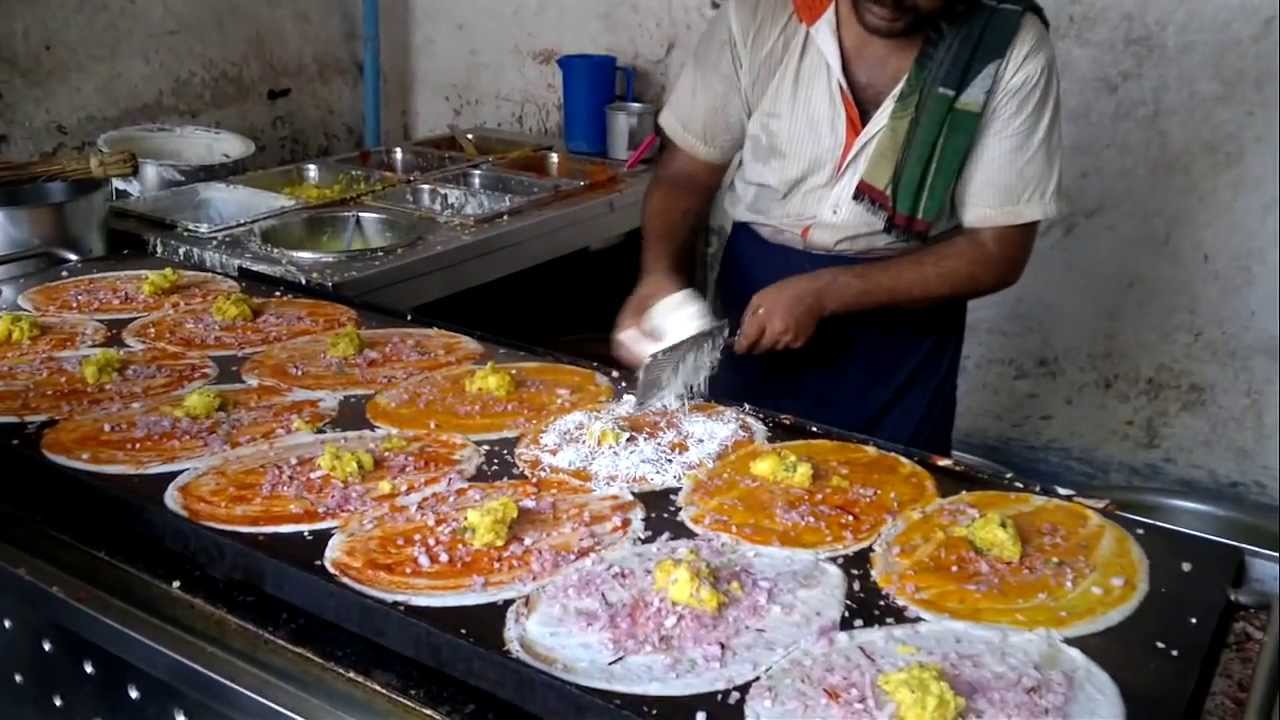
Raghuram Rajan, RBI governor, likes dosas. Or, rather, he likes using the popular South Indian pancake to explain economic theories. :)


In a speech in January, the governor of the Reserve Bank of India set out why high inflation is the “silent killer” of growth. With high inflation and high interest rates, one who invests 1,00,000 rupees could buy the same number of dosas with the interest at the end of the year as he could at the start, Mr. Rajan said. But if inflation came down, even with a lower interest rate, the same person could buy more dosas each year with the return on his investment.
Mr. Rajan calls this dosa economics.


“When inflation is 5.5% but the interest rate you are getting is 8%, you are earning a real rate of 2.5%, which means 2.5% more dosas,” he said.


Then, in a question and answer session last month, an engineering student asked Mr. Rajan more about his “Dosanomics.”

“When the inflation rate goes up the dosa price goes up, but when the inflation rates are lower, the dosa prices are not lowered. What is happening to our beloved dosa sir?” the student asked at the forum organised by Federal Bank.


Mr. Rajan smiled as he responded. “You have hit on another issue in economics, which is called the Balassa-Samuelson effect,” the central bank chief explained.


He was referring to a proposal by economists Paul Samuelson and Bela Baslassa that countries with high growth in productivity also have high wage growth.


“The technology for making Dosas hasn’t actually changed,” Mr. Rajan continued.
“There has been no technological improvement there. However the wages of paying that gentleman especially in a high wage state like Kerala are going up all the time because that worker can be used in much more productive areas,” he added.


Factory workers or bank clerks can now serve more people because of technology. The dosa guy can’t.
So what happens is, in an economy which is growing, the prices for the goods manufactured by sectors that aren’t improving their technology will go up faster than in those where production speeds are going up.
“That’s Balassa Samuelson, you are seeing it in the price of Dosa” Mr. Rajan concluded.

Budget 2016 Highlights


Tax

  • Excise duty raised from 10 to 15 per cent on tobacco products other than beedis
  • 1 per cent service charge on purchase of luxury cars over Rs. 10 lakh and in-cash purchase of goods and services over Rs. 2 lakh.
  • SUVs, Luxury cars to be more expensive. 4% high capacity tax for SUVs.
  • Companies with revenue less than Rs 5 crore to be taxed at 29% plus surcharge
  • Limited tax compliance window from Jun 1 - Sep 30 for declaring undisclosed income at 45% incl. surcharge and penalties
  • Excise 1 per cent imposed on articles of jewellery, excluding silver.
  • 0.5 per cent Krishi Kalyan Cess to be levied on all services.
  • Pollution cess of 1 per cent on small petrol, LPG and CNG cars; 2.5 per cent on diesel cars of certain specifications; 4 per cent on higher-end models.
  • Dividend in excess of Rs. 10 lakh per annum to be taxed at additional 10 per cent.
  • Infrastructure and agriculture cess to be levied.

Personal Finance

  • No changes have been made to existing income tax slabs
  • Rs 1,000 crore allocated for new EPF (Employees' Provident Fund) scheme
  • Govt. will pay EPF contribution of 8.33% for all new employees for first three years
  • Deduction for rent paid will be raised from Rs 20,000 to Rs 60,000 to benefit those living in rented houses.
  • Additional exemption of Rs. 50,000 for housing loans up to Rs. 35 lakh, provided cost of house is not above Rs. 50 lakh.
  • Service tax exempted for housing construction of houses less than 60 sq. m
  • 15 per cent surcharge on income above Rs. 1 crore

Social
  • Rs. 38,500 crore for Mahtma Gandhi MGNREGA for 2016-17
  • Swacch Bharat Abhiyan allocated Rs.9,500 crores.
  • Hub to support SC/ST entrpreneurs
  • Government is launching a new initiative to provide cooking gas to BPL families with state support.
  • LPG connections to be provided under the name of women members of family: Rs 2000 crore allocated for 5 years for BPL families.
  • 2.87 lakh crore grants to gram panchayats and municipalities - a quantum jump of 228%.
  • 300 urban clusters to be set up under Shyama Prasad Mukherji Rurban Mission
  • Four schemes for animal welfare.

Health
  • 2.2 lakh renal patients added every year in India. Basic dialysis equipment gets some relief.
  • A new health protection scheme for health cover upto 1 lakh per family.
  • National Dialysis Service Prog with funds thru PPP mode to provide dialysis at all district hospitals.
  • Senior citizens will get additional healthcare cover of Rs 30,000 under the new scheme
  • PM Jan Aushadhi Yojana to be strengthened, 300 generic drug store to be opened

Education
  • Scheme to get Rs.500 cr for promoting entrepreneurship among SC/ST
  • 10 public and 10 private educational institutions to be made world-class.
  • Digital repository for all school leaving certificates and diplomas. Rs. 1,000 crore for higher education financing.
  • Rs. 1,700 crore for 1500 multi-skill development centres.
  • 62 new navodaya vidyalayas to provide quality education
  • Digital literacy scheme to be launched to cover 6 crore additional rural households
  • Entrepreneurship training to be provided across schools, colleges and massive online courses.
  • Objective to skill 1 crore youth in the next 3 years under the PM Kaushal Vikas Yojna-FM Jaitley
  • National Skill Development Mission has imparted training to 76 lakh youth. 1500 Multi-skill training institutes to be set up.
Energy
  • Rs. 3000 crore earmarked for nuclear power generation
  • Govt drawing comprehensive plan to be implemented in next 15-20 years for exploiting nuclear energy
  • Govt to provide incentive for deepwater gas exploration
  • Deepwater gas new disc to get calibrated market freedom, pre-determined ceiling price based on landed price of alternate fuels.
Investments and infrastructure
  • Rs. 27,000 crore to be spent on roadways
  • 65 eligible habitats to be connected via 2.23 lakh kms of road. Current construction pace is 100 kms/day
  • Shops to be given option to remain open all seven days in a week across markets.
  • Rs. 55,000 crore for roads and highways. Total allocation for road construction, including PMGSY, - Rs 97,000 crore
  • India's highest-ever production of motor vehicles was recorded in 2015
  • Total outlay for infrastructure in Budget 2016 now stands at Rs. 2,21,246 crore
  • New greenfield ports to be developed on east and west coasts
  • Revival of underserved airports. Centre to Partner with States to revive small airports for regional connectivity
  • 100 per cent FDI in marketing of food products produced and marketed in India
  • Dept. of Disinvestment to be renamed as Dept. of Investment and Public Asset Management
  • Govt will amend Motor Vehicle Act in passenger vehicle segment to allow innovation.
  • MAT will be applicable for startups that qualify for 100 per cent tax exemption
  • Direct tax proposals result in revenue loss of Rs.1060 crore, indirect tax proposals result in gain of Rs.20,670 crore
Agriculture
  • Total allocation for agriculture and farmer welfare at Rs 35984 crores
  • 28.5 lakh heactares of land wil be brought under irrigation.
  • 5 lakh acres to be brought under organic farming over a three year period
  • Rs 60,000 crore for recharging of ground water recharging as there is urgent need to focus on drought hit areas cluster development for water conservation.
  • Dedicated irrigation fund in NABARD of Rs.20.000 cr
  • Nominal premium and highest ever compensation in case of crop loss under the PM Fasal Bima Yojna.
Banking
  • Banks get a big boost: Rs 25,000 crore towards recapitalisation of public sector banks. Jaitley says: Banking Board Bureau will be operationalised, we stand solidly behind public sector banks.
  • Target of disbursement under MUDRA increased to 1,80,000 crore
  • Process of transfer of government stake in IDBI Bank below 50% started
  • General Insurance companies will be listed in the stock exchange
  • Govt to increase ATMs, micro-ATMs in post offices in next three years


Li-Fi = 100 x Wi-Fi


Li-Fi, a super-fast alternative to Wi-Fi, is finally moving from research labs to the real world after an Estonian startup implemented the technology within a commercial context.It has begun trialing the technology within offices and industrial environments.

The Li-Fi technology is able to send data at up to 1GBps - more than 100-times faster than current Wi-Fi technologies. At these speeds, a high-definition film could be downloaded in just a few seconds.

While Li-Fi may not completely replace Wi-Fi, the technologies could be used in parallel to create more efficient networks. The success of the pilot projects could see Li-Fi technology rolled out for consumers within the next three to four years, allowing people to access the internet using the light bulbs in their home.

Before mass adoption of Li-Fi can be realised, techniques need to be developed to retrofit current devices with the technology.

The inventor of Li-Fi, Professor Harald Haas from the University of Edinburgh, has previously claimed that in the future every LED lightbulb could be used as an ultra-fast alternative to Wi-Fi. In a TED talk describing the technology, Haas said that current infrastructure was suitable for the integration of Li-Fi.

"All we need to do is fit a small microchip to every potential illumination device and this would then combine two basic functionalities: illumination and wireless data transmission," Haas said. "In the future we will not only have 14 billion light bulbs, we may have 14 billion Li-Fis deployed worldwide for a cleaner, greener and even brighter future."

What is Li-Fi?

Li-Fi is a wireless technology similar to Wi-Fi that allows data to be sent at high speeds using visible light communication (VLC). Invented by Professor Harald Haas from the University of Edinburgh, Li-Fi has several advantages over Wi-Fi.

Li-Fi allows for greater security on local networks as light cannot pass through walls, which also means there is less interference between devices. Perhaps the most significant advantage is the speed that the technology offers. Researchers have achieved speeds of 224 gigabits per second in lab conditions.

Source: IBTimes Co., Ltd. 

It's never too late to start

Self doubt has killed more dreams than failure.


Forbes looked at the life of the top 100 founders on it's most successful founders list. It shows that 35 is the most common age to start one of the top companies in the world. They excluded the companies that were inherited, and where governments were heavily involved. So does success come with a deadline? What's the best age to achieve success? BI India looks at some of the crisis periods one goes through in their life in their quest for success with some help from the guys at Funders and Founders.

'The Critical Period' - Do it Early
Musical talent is usually discovered in the first ten years of one's life. New languages cannot be learned without an accent after the critical age of 16. Most successful computer programmers started coding as children, and gifted athletes commonly celebrate their twentieth birthday as a celebrity. That can make you feel like a loser if you're 30 and can only boast of a College degree. However, that's a false impression.

The Mid-Life Crisis
In life, most people succeed mid-life. That's about 35 for the current generation. In our minds we expect major life achievements to happen around the middle age, otherwise - the mid-life crisis.

The Quarter-Life Crisis
With teenage CEOs making news headlines, one can feel like a late bloomer even at 25. Since today we expect to live longer than today's average life span of 78 years, at 25 you can reasonable think you are through a quarter of your life. This is a newer term than the good old mid-life crisis.

Late Bloomers are Not Losers
Is it better to be an early achiever or a late bloomer? For the world it does not matter. Is it too late for you at 60 to start a new company? Never.


Source: Business Insider

Google employee in San Francisco saves 90% of salary by living in a truck


A Google employee in San Francisco has decided to forgot the luxuries that come with renting a property -  such as heating, air conditioning and a bathroom - to live in a truck in the company’s car park, a move that saves him nearly 90 per cent of his income by not paying rent.

The employee, known only as Brandon, has been blogging about his experience, describing how he eats all of his meals at Google, showers every day at the company's gym, and charges up a battery in the office that helps to power his laptop and other items when he uses them inside the truck.

Brandon has been living in the 16ft truck for around five months and details in his blog how he came up with the idea. During an internship at Google last summer, Brandon spent nearly $100 (£65) a night in corporate housing, which he barely spent any time in.

“The summer starts, and I'm having an amazing time, but as I start to settle into a routine, I notice something fairly tragic: for all the money I'm spending on this apartment, I'm hardly ever there! I wake up, catch the first GBus to Google, work out, eat breakfast, work, eat lunch, work, eat dinner, hang out at Google, and eventually take a bus home, pack my gym bag for the next day, and go to sleep,” he writes.

After graduating with nearly $22,500 (£14,560) in student debt and knowing he would return to the company as a software engineer, he discovered the average cost of rent where he had wanted to live – the Mountain View area – was around $2,100. He instead decided to pay $10,000 for the truck instead.


Speaking to Business Insider, Brandon said he has already paid off a large chunk of his student loans with the money he saved on rent, and expects to be debt free within six months.

“I’m going for a target of saving about 90 per cent of my after-tax income, and throwing that in student loans and investments,” he said.

Brandon’s only financial responsibility is his monthly insurance payments for the truck, costing around $121 (£78), but he barely has any possessions – the sparsely decorated truck contains a bed, a dresser, and a self-fashioned clothes rack.

He has had one run in with the security outfit on the company’s property after parking up late one night on his return home from the cinema. But when the guards discovered Brandon was an employee, they let him go back to bed and complimented him on his “sweet set-up,” he said.

India-Pakistan border pictures shared by NASA


NASA on Sunday, 4th October 2015 shared some stunning pictures of the international border of India and Pakistan as seen from the outer space.

An astronaut from the International Space Station took photographs of the night time panorama of the border facing north across Pakistan's Indus River valley. The image is of one of the few international borders in the world which can be seen so clearly at night, especially due to the high security and several security lights across the border which have a distinct orange tint for it to stand out. 

The picture which was shared on NASA's Facebook page also shows the port city of Karachi which appears to be a bright cluster of lights in stark contrast with the black Arabian Sea.

There is another picture of the border zone between India and Pakistan as seen in daytime which was shared by NASA in 2011, The image shows the border zone looking south east from the Himalayas


Gi FlyBike: Electric bike that tries to include any feature bike commuters might want


As more people start to commute by bike, designers are trying to tackle the various pain points involved with riding in the city—whether that’s finding ways to help cyclists squeeze bikes on public transit, adding electric motors so riders sweat less, or preventing theft. A typical design might focus on a couple of features at a time, but the Gi Bike, a new design that just launched on Kickstarter, attempts to include every possible detail a commuter could want.

"There are no full-featured bikes on the market," says Agustín Augustinoy, the chief technology officer for Gi Bike. "If a bike folds, it has 20-inch, circus-like wheels. Electric kits look like DIY projects. No electric bike comes with lights, motor, and everything else integrated and working on the same battery with only one charging point."

The Gi Bike can fold up, so it easily goes on subway cars or elevators, and can be stored in a small closet. But when it’s in use, it looks like an ordinary full-size bicycle. Flip a lever, and in three seconds, it fully transforms into a compact folded shape that can be wheeled around like rolling luggage.

"The rest of the bike is basically made around the folding mechanism," Agustinoy explains. "For us it's the proper way to fold a bike. It's the only way you don't need to lift the bike from the ground."

For riders who live in hilly cities or have a long commute, the bike comes in an electric version that can carry someone 40 miles without pedaling. It’s also smartphone-integrated, so it can give directions and send alerts if there's construction or heavy traffic on your route. It hooks up with social media accounts in case you have the urge to auto-tweet your bike rides. The bike can even charge your phone.

Once you get wherever you're going, the bike can lock itself—both wheels and the folding mechanism lock automatically when you walk 10 feet away. Eventually, the designers hope to connect it with tracking technology as well.

To help keep riders safe, the designers added built-in front and back lights. Since their research showed that most cyclists are hit from the side, the designers also added LED lights to the sides of the front wheel. The lights automatically brighten at night.

It's a long list of features, but Agustinoy says the team thinks that each is necessary, despite the steep price (The electric version will eventually retail for $3,590 but is available on Kickstarter for slightly less). "We believe it's the perfect bike to commute to work," he says.

Source: giflybike.com

Sources say Apple car on the way in 2020


Apple is continuing its efforts to create a car, though some of the big questions around the project remain undecided.

The company is still working out whether it will make a self-driving car, an electric vehicle or a combination of the two, according to a person with knowledge of the product, who spoke on the condition of anonymity, as Apple is known for its intense secretiveness. It is not unusual for Apple to work on several prototypes of a product at the same time, as it did with the iPhone and the iPad.

Other details of the car project are falling into place. Apple is committing hundreds of people to the effort, and meeting with officials of the California Department of Motor Vehicles and of a testing ground for self-driving cars, said the person with knowledge of the work. The Wall Street Journal and The Guardian previously reported on those developments. Apple is aiming to introduce some sort of car product around 2020, several people with knowledge of the project said.

Since reports that Apple, the world’s most valuable company, was working on a car surfaced in February, the auto and tech industries have closely watched any progress, because Apple could transform the car industry the same way it did the mobile phone industry. Vehicles, which are essentially turning into moving computers, could be a huge new platform for technology companies. Google and Uber are both working on self-driving vehicles.

At the Frankfurt International Motor Show this month, carmakers were obsessed with what the nonauto companies like Apple and Google might be developing. Detroit has come a long way since the financial crisis, and advanced sensor-based safety features are available on many models of cars from Ford and General Motors. But none of them have the software expertise of a company like Apple, and they do not want to be stuck manufacturing the bodies of the vehicles while another company controls the more lucrative software.

“We do not plan to become the Foxconn of Apple,” Dieter Zetsche, the chief executive of Daimler, told reporters at the auto show in Frankfurt.
Sergio Marchionne, the chief executive of Fiat Chrysler, has sought a relationship with Apple. This year, he met with Timothy D. Cook, Apple’s chief executive, during a three-day trip to California. In an interview this spring, he called companies like Apple and Google “disrupters.” After a speech this spring, he said of the technologies they were inventing: “It’s not science fiction. They’re coming.”
Mr. Cook has sidestepped questions about a car.

Apple has about 600 employees working on the undertaking, called Project Titan, according to a person with knowledge of the project. Apple is deploying more internal resources to Titan, pulling people from other projects, like the Apple Watch, to work on it, said two people with knowledge of the plans.

Apple executives recently met with the California D.M.V., which in 2012 was tasked with promulgating self-driving car regulations. In a statement, the department said the “D.M.V. often meets with various companies regarding D.M.V. operations. The Apple meeting was to review D.M.V.’s autonomous vehicle regulations.”

Apple engineers have also met with officials from GoMentum Station in Concord, Calif., which is known as a testing ground for self-driving cars, according to a person with knowledge of the meeting. The Guardian earlier obtained documents about the meeting.


Source: The New York Times Company